Bob Boyte Honda - Which three-row SUV feels more surefooted day to day around Flowood, MS — the 2026 Honda Pilot or the 2026 Toyota Highlander?
Comparing all-wheel-drive confidence means more than looking at spec sheets. Around Flowood, MS, drivers juggle school lines, Lakeland Drive commuting, and weekend trips to the Reservoir, so traction has to be predictable in the rain, composed on gravel turn-ins, and smooth on the highway. That’s where the Pilot’s available i-VTM4® all-wheel drive and 7-Mode Drive System (Normal, ECON, Sport, Snow, Trail, Sand, and Tow) show their depth next to the Highlander’s AWD with Drive Modes and Multi-Terrain Select. Both SUVs are capable, but their systems behave differently when conditions change quickly or when one side of the vehicle encounters a slick patch.
How the AWD approaches differ
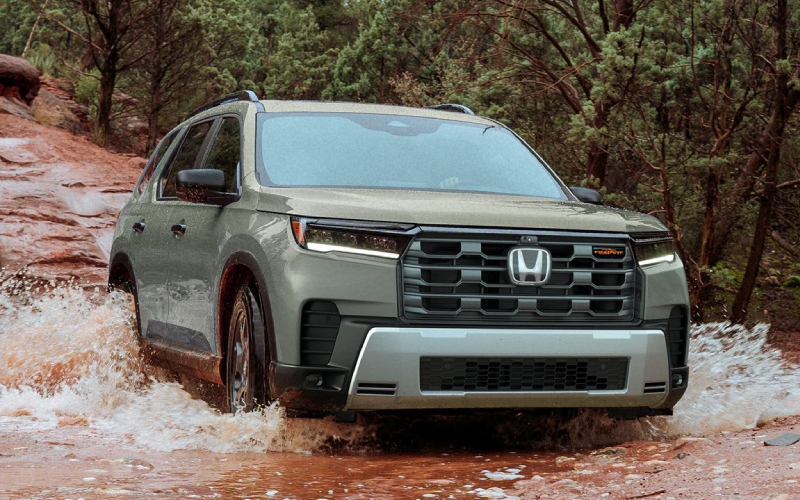
The Pilot’s i-VTM4® can send torque not just front-to-rear but also side-to-side across the rear axle, actively helping the vehicle rotate and hold a confident line. That’s noticeable when you pull across a damp intersection or sweep onto the freeway from a short on-ramp. In Trail and Sand modes, the Pilot recalibrates throttle, traction control, and shift strategy, giving you smoother progress on loose surfaces—useful for gravel access roads or sandy, uneven pull-offs by the water. Highlander’s AWD and Multi-Terrain Select enhance grip too, especially in Snow, Mud & Sand, or Rock & Dirt, but the Pilot’s extra drive modes and torque distribution strategy deliver a more grounded feel in quick transitions and mixed-traction moments.
Another daily-life difference is visibility. On select trims, Pilot’s Multiview Camera System with TrailWatch™ offers low-speed, terrain-focused views to help you avoid curbs, rocks, and ruts. Highlander’s Panoramic View Monitor provides a helpful 360-degree view as well, particularly for parking and tight spaces. In practice, both are supportive, but Pilot’s trail-focused camera tuning gives it a slight edge on unpaved or uneven surfaces—exactly the spots where drivers want a little more certainty.
Everyday scenarios where the Pilot shines
Maximizing real-world traction isn’t only about bad weather. It’s about minimizing wheelspin during a hurried left turn across traffic, keeping the vehicle settled as you navigate a crowded shopping center, and maintaining calm, linear power on freeway merges. The Pilot’s refined 10-speed automatic, tuned to hold the right gear without drama, helps here. Its V-6 power delivery is smooth and predictable, which pairs naturally with the AWD system’s proactive torque transfer.
- Quick urban transitions: The Pilot’s torque-vectoring behavior helps the rear outside wheel maintain push through tight corners, aiding confident, tidy acceleration from side streets.
- Low-speed surface changes: Driveways, speed humps, and sudden patches of gravel or leaves can unsettle some SUVs; the Pilot’s tuning keeps progress smooth.
- Light off-pavement duty: With available Trail and Sand modes—and, on TrailSport, steel skid plates and an off-road-tuned suspension—the Pilot handles uneven approaches more gracefully.
To be fair, Highlander counters with poised manners and a confident, efficient powertrain lineup. For many drivers, its AWD and Multi-Terrain Select will be more than enough. The difference is how composed and intuitive the Pilot feels when conditions are mixed—damp pavement, a painted crosswalk, and a turn across traffic—back to back.
Cabin tech that supports confident driving
Confidence also comes from the information you see and hear. The Pilot’s available 12.3-inch touch-screen with Google built-in keeps maps and voice control simple and responsive, while the 10.2-inch digital instrument cluster communicates drive mode and system status clearly. CabinTalk® lets your voice reach row three without distraction, and on higher trims, the Bose premium sound system keeps podcasts and navigation prompts crisp. Highlander’s available 12.3-inch Toyota Audio Multimedia system and optional JBL® audio deliver a well-integrated, modern experience too. Both SUVs offer robust safety suites—Honda Sensing® in Pilot and Toyota Safety Sense™ 2.5+ in Highlander—each designed to support highway driving, stop-and-go traffic, and unexpected slowdowns.
For towing and weekend gear, both SUVs can pull up to 5,000 pounds when properly equipped. The Pilot’s 7-Mode Drive System adds a thoughtful Tow mode that optimizes response when you’re pulling a small camper or boat to the launch. That seamless integration between powertrain, driveline, and software is part of what makes the Pilot feel so steady even when load and conditions change.
Who should choose the Pilot for traction confidence?
If your daily route blends city driving with quick arcs onto the interstate, if you often park on uneven shoulders or approach gravel boat ramps, or you simply want a three-row SUV that remains composed the moment weather or pavement changes, the Pilot’s AWD strategy and drive mode depth are a strong fit. Add in the Multiview Camera System with TrailWatch™ on select trims, and you have visibility working with traction rather than just reacting to it.
Frequently Asked Questions:
Does the Pilot’s i-VTM4® feel different from Highlander’s AWD in daily driving?
Yes. The Pilot’s system can actively apportion torque side-to-side across the rear axle, which you feel as more confident rotation and steady acceleration, especially on damp roads or tight, low-speed turns.
Do both SUVs have traction modes for loose surfaces?
Both offer selectable modes. Pilot provides up to seven, including Trail and Sand, while Highlander offers Drive Modes and, on AWD models, Multi-Terrain Select settings like Mud & Sand or Rock & Dirt.
Which model gives better low-speed visibility around obstacles?
Both offer 360-degree camera systems. Pilot’s TrailWatch™ focuses on terrain-oriented views on select trims, which can be particularly helpful off pavement or in uneven parking areas.
At Bob Boyte Honda—serving Jackson, Madison, and Flowood—we help shoppers map features to real-life routes so your choice fits how you actually drive. If you want an SUV that balances smooth highway manners, confident urban responses, and genuine composure on mixed surfaces, the Pilot’s AWD approach and drive mode breadth deliver the kind of day-to-day traction that lowers your shoulders and lets you enjoy the ride.
We welcome hands-on comparisons, including test routes that mimic your commute and weekend plans. Our team will walk you through how the systems behave, what each mode changes, and which trim combinations best match your priorities, from cabin tech to trail-friendly hardware. That way, when you decide, you’ll know exactly why the Pilot’s surefooted character feels right for your roads.